The Case for Looking Carefully: Britain’s Mummy Displays and the Ethics of Interpretation
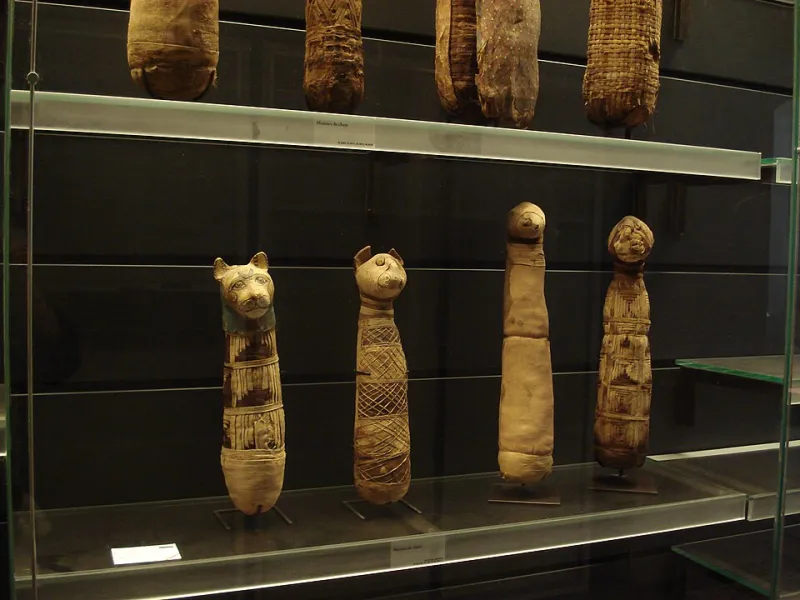
Photo: Vania Teofilo, CC BY-SA 3.0, via Wikimedia Commons
Few museum displays provoke as much quiet discomfort as a mummy. The wrapped body, the painted coffin, the exposed face or hands: these are objects that refuse to be only objects. Visitors bring curiosity, and often unease, to the encounter. Museums know this, and the debate about how ancient Egyptian human remains should be displayed has become one of the more visible ethical questions in the sector.
The easy positions are familiar. One says that human remains should be removed from public view because display is inherently disrespectful. The other says that museums are educational institutions and that visitors should be free to look. Neither is adequate. The first can obscure the history that produced the collection; the second can treat dignity as a matter of taste. A better response lies in interpretation: clearer labels, stronger context and a more honest account of why these bodies are in Britain at all.
What Is Actually on Display
In UK museums, ancient Egyptian human remains appear in several forms. There are wrapped mummies, partly unwrapped bodies, skeletal material, detached heads and coffins that once contained bodies. Some are displayed in dedicated galleries; others sit within broader narratives about death, religion or daily life. The display regime matters. A body shown as a specimen tells a different story from a body shown as a person with a name, a family and a funerary tradition.
The debate is often framed around visitor curiosity, but curiosity is not the problem. The problem is unearned curiosity: looking that is encouraged without explanation, and spectacle that is presented without responsibility. Victorian unwrappings turned human remains into public entertainment. Modern museums have largely moved away from that model, but the visual habits it created have not disappeared.
Consent, Analogy and the Limits of Good Intentions
It is often said that ancient Egyptians cannot consent to display. That is true, and it is also too simple. Consent is not the only ethical category. Museums can still ask whether display serves a legitimate purpose, whether the body is treated with dignity, and whether communities with a claim to the material have been consulted. Egypt is not a single community, and Egyptian opinion is not uniform. But the absence of a simple consent procedure does not remove the obligation to think carefully.
There is also a risk of misplaced analogy. Ancient Egyptian funerary beliefs are not identical to modern religious sensibilities, and it would be patronising to assume that contemporary Egyptians all speak with one voice about mummies. Yet the principle remains: human remains are not ordinary collection items. They carry a different weight, and display should reflect that difference.
The Problem with Bare Display
A mummy behind glass, with a short label giving a dynasty and a site, is not neutral. It is the product of a particular history of excavation, collection and museum display. That history includes colonial networks, diplomatic gifts, private purchases and the antiquities market. Some of it was scholarly; some of it was acquisitive. Visitors are rarely told which is which.
Better interpretation would not require removing every body from view. It would require saying more. A label could explain what the body is, how it came to Britain, what is known about the person and what remains uncertain. It could explain ancient Egyptian funerary practice without turning it into a version of modern grief. It could acknowledge that display is a choice, not an inevitability.
What Removal Can Obscure
Removal is sometimes the right response. There are bodies that should not be on public display, and there are displays that treat human remains as spectacle rather than evidence. But removal can also become a way of avoiding the harder work of interpretation. A museum that takes a mummy off view but leaves its acquisition history unexamined has not resolved the ethical question. It has only made it less visible.
The same is true of content warnings. A warning can be a courtesy, but it can also function as a substitute for thought. The more demanding approach is to explain why the display exists, what it is asking visitors to consider and how the museum has weighed the competing claims of education, dignity and public access.
A British Question
This is a particularly British debate because so many UK museums hold Egyptian material, and because those collections are entangled with Britain’s imperial past. The Museums Association’s code of ethics and national guidance on human remains provide a framework, but frameworks do not write labels. They do not decide whether a body is shown in a case with dramatic lighting or in a quiet room with a clear explanation. Those are curatorial choices, and they should be defended publicly.
The argument of this article is therefore not that museums should stop displaying mummies. It is that they should stop displaying them without adequate interpretation. Visitors should be trusted with complexity. They should be told what they are looking at, why it is there and what the museum has decided to do about it. In 2026, with public trust in institutions under scrutiny, that kind of candour is not an optional extra. It is the minimum condition of ethical display.