The Syllabus and the Sandstone: Why Kemet Deserves More Than a Decorative Slot

Photo: Thomas Nugent, CC BY-SA 3.0, via Wikimedia Commons
At a typical primary school in England, a Year 6 topic on ancient Egypt may begin with pyramids, mummies and a handful of gods. The Sphinx becomes a logo. The Nile becomes a timetable. The pharaoh becomes a costume. None of this is wrong, but it is thin. It turns Kemet into a decorative footnote to the story of civilisation rather than a society with its own administration, labour, literature, diplomacy and internal arguments.
That matters in 2026 because England’s curriculum is again being discussed as a question of content and purpose. Whatever the outcome of current reviews, the classroom remains the place where most British children first meet ancient Egypt. The opportunity is not simply to add more facts. It is to change the shape of the enquiry.
A depth study or a display case?
The National Curriculum for history at key stage 2 gives schools a choice of early civilisations, with ancient Egypt frequently selected because it is familiar, visually rich and well served by museums. That familiarity is an advantage. It is also a risk. When a topic is already saturated with film, fiction and museum merchandise, the curriculum can settle for recognition rather than understanding.
Teachers are not to blame for this. Primary history is pressed for time, and ancient Egypt competes with local history, British history and the demands of literacy and numeracy. Museum loan boxes and online collections can be genuinely useful, but they are often used to illustrate a pre-written story rather than to complicate it. The result is a syllabus that can name Tutankhamun but cannot explain why taxation, grain storage or scribal training mattered.
A more defensible approach is to treat Kemet as a depth study in the proper sense: a society to be investigated, not a gallery to be walked through. That means asking how power was exercised, how food was produced, how words were written and who was excluded from the written record. It means allowing ancient Egypt to be strange as well as spectacular.
The name on the classroom wall
Language is part of the problem. Egypt is a familiar name with a Greek lineage; Kemet is the term the people of the Nile Valley used for their own land, commonly understood as the black land of the fertile soil. It does not need to replace Egypt in every sentence, and it should not be presented as a simple racial label. But using it alongside Egypt signals that the people of the Nile Valley had their own name for themselves.
That small move matters for British pupils. It interrupts the assumption that ancient Egypt is a universal backdrop rather than a specific African place with its own intellectual traditions. It also gives teachers a way to discuss how names, translations and museum labels carry assumptions. A class can ask why one name travelled so far while another stayed closer to home. That is not political correctness; it is historical literacy.
Objects before ornaments
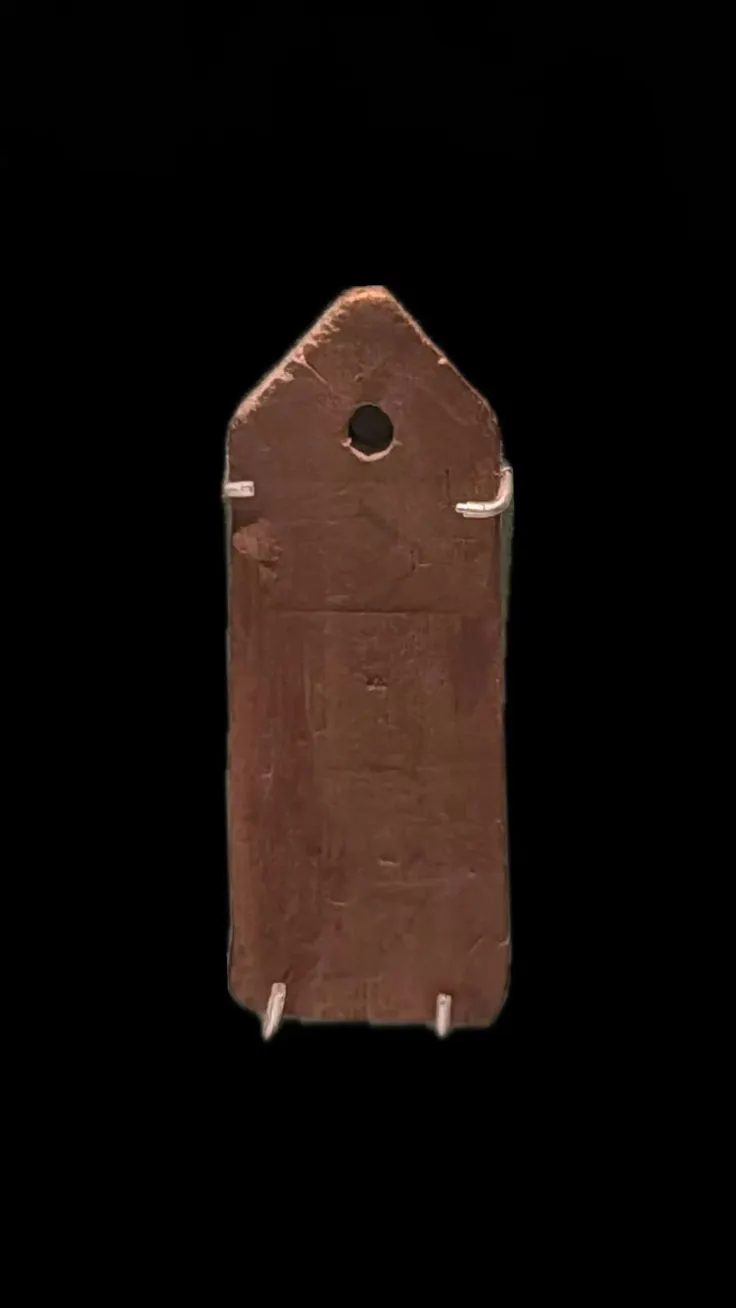
Museum education practice already shows what this can look like. A shabti figure is not only a pretty figurine; it raises questions about labour, belief and mass production. An ostraca sherd with a school exercise is not only a curiosity; it opens a window onto training, literacy and the routine use of writing. A bread mould can lead to agriculture, taxation and household economy. These objects are ordinary enough to be believable and specific enough to be demanding.
In 2026, many UK museums offer handling collections and digital resources that make such enquiries possible without a coach trip to London. The Ashmolean, the Great North Museum: Hancock, the World Museum in Liverpool and Birmingham Museum and Art Gallery have all supported schools in different ways. The pedagogical point is not that every class needs an original object. It is that objects should generate questions rather than merely decorate a timeline.
A useful classroom sequence might begin with a single object, move to a short source extract, and end with a written argument. Pupils should be asked what the object can tell us, what it cannot tell us, and whose voice is missing. That is a more honest encounter with the past than a worksheet of gods and their responsibilities.
The repatriation question in Year 6
Repatriation is often treated as a topic for older students, but it can be introduced with care in the primary classroom. The question of where objects belong is not an optional add-on to ancient Egyptian history; it is part of the afterlife of that history in British museums. Pupils can discuss the Rosetta Stone, the Parthenon sculptures or Egyptian collections in British institutions without being asked to settle complex legal disputes.
The aim is not to deliver a verdict. It is to teach that heritage is contested, that museums make choices, and that source communities have claims. A balanced enquiry can include the arguments for universal museums alongside the arguments for return. Children can understand that an object can be important to a museum in London and to a museum in Cairo at the same time. That is a valuable lesson in evidence, empathy and civic reasoning.
A framework for 2026
Four moves would improve the syllabus without demanding a wholesale rewrite. First, name Kemet alongside Egypt and explain the difference. Second, teach through objects and people rather than monuments alone. Third, place Kemet in African and Mediterranean networks, not in an isolated display case. Fourth, make heritage questions part of the enquiry rather than a moral appended at the end.
Teachers need support to do this well. That means continuing professional development that treats ancient Egypt as a serious historical field, not a seasonal theme. It means museum partnerships that go beyond outreach boxes. It also means assessment that rewards explanation and argument, not only the recall of funerary facts.
Curriculum content is never neutral. It tells children what counts as civilisation, whose names matter and which questions are worth asking. In 2026, England’s classrooms can do better than a syllabus in which the Sphinx sits at the edge of the page. Kemet deserves to be taught as a society with sandstone, yes, but also with scribes, farmers, officials, arguments and a voice of its own.