Words Beneath the Surface: The Quiet Revolution in Reading Britain’s Egyptian Papyri
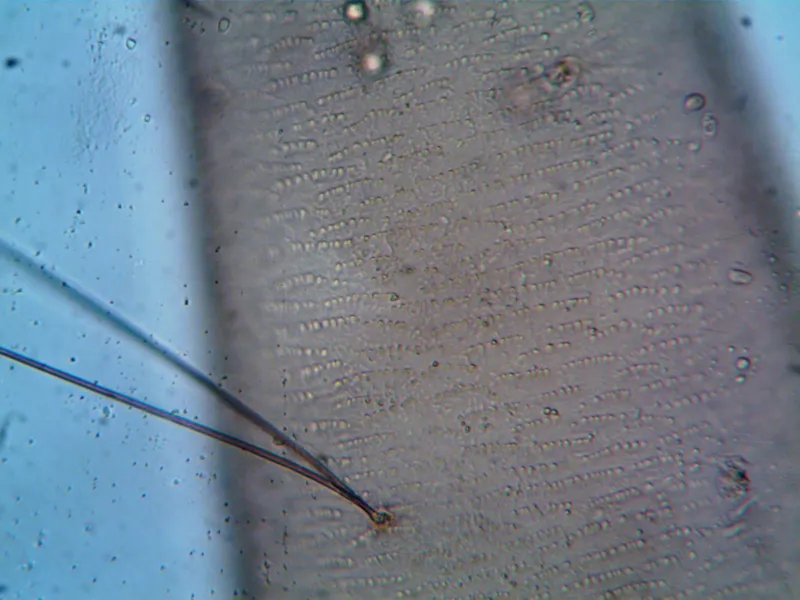
Of all the materials that survive from Kemet, papyrus is the most eloquent and the least obliging. A limestone relief will hold its meaning for another thousand years; a sheet of pressed reed pith, once exposed to damp, light and the pressure of a nineteenth-century glass mount, may lose it within a season. Britain holds tens of thousands of such sheets and fragments — at the British Library, the Ashmolean, the Petrie Museum, the Bodleian, Cambridge University Library and the John Rylands in Manchester — and a substantial proportion of them have never been read in full, or read at all.
This is not for want of scholarly appetite. It is because the ink is frequently the same tone as the age-darkened surface beneath it; because the fibres have cockled, abraded and fused; because the fragment is adhered to a card cut by a Victorian conservator who had no reason to imagine anyone wishing to see the reverse. The task of the next decade is, in a literal sense, to see through those obstacles.
Where the reading has tended to stop
Papyrology grew up around literature. A fragment of Sappho or a lost play of Menander justifies a publication, a conference and a headline. Yet the great majority of surviving papyri are not literature at all: they are contracts, tax receipts, petitions, accounts, private letters, school exercises and wills. These documents are the reason a social historian's eyes brighten and a press officer's do not.
The result is an accumulated backlog of a particular kind — not fragments too damaged to read, but fragments too ordinary to have been read yet. British collections hold quantities of these working papers, and their publication has long depended on the goodwill of individual scholars working slowly through glass frames, in the intervals between teaching.
What the instrument can distinguish
Multispectral imaging has become the workhorse of the field. A fragment is photographed repeatedly under narrow bands of light, from ultraviolet through the visible spectrum into the near-infrared, and the resulting image stacks are processed to emphasise differences that the eye cannot separate. Inks of differing chemistry — carbon-based black, iron-gall, and the red ochre used for rubrics and headings — behave differently under these conditions, and principal component analysis can render faint or obscured writing legible where it has long appeared blank.
The technique's promise should not be overstated. Carbon ink is dark across the infrared as well as the visible range, so a carbon-ink text on a blackened surface remains stubbornly obstinate; it is where inks differ in composition that the gains are greatest. Alongside multispectral work, reflectance transformation imaging and photometric stereo record not colour but topography — the slight ridge where a pen rested on the fibre — and can produce a legible record of writing that has been physically lost to abrasion.
The conservation problem behind the photograph
The image is not free. Each campaign of imaging involves movement, handling and sustained illumination, including ultraviolet exposure that is itself a form of damage. Conservation practice therefore treats the digital surrogate as a substitute for handling rather than an addition to it: a fragment imaged once, well, need not be brought out again for a visiting scholar or a loan request.
Debate continues, quietly and properly, about the legacy mounts. Releasing a papyrus from the gummed card or glass sandwich of an earlier era may reveal a verso, recover a lost line and improve long-term stability — or may destroy evidence of how the sheet was found, folded and used. The best-resourced laboratories in Britain now approach such interventions with humidification chambers, cushioned cradles and a strong prejudice in favour of doing less. Where an object is stable, the argument for restraint is usually the stronger one.
Machines that suggest, scholars who decide
Automated ink detection, adapted from work on the carbonised scrolls of Herculaneum, has shown what machine learning can do when trained on the faint traces left on a damaged surface. Handwritten text recognition, already routine for modern archives, is being extended to Greek and Coptic hands, and can cut the preliminary labour of transcription considerably.
But a lacunose text is not a clean dataset. Where a third of the letters are lost, a model that supplies plausible readings is guessing, and the difference between a guess and an edition is precisely what papyrology exists to police. In current British projects the machine proposes and the editor disposes; the apparatus criticus, not the algorithm, carries the authority.
Who is invited to read
The recovered word raises a question that the recovered image does not answer. Publication in Britain has historically been slow, dispersed across volumes and subscriptions, and uneven in its openness. There is a gathering case for open licensing of images, for publishing documentary texts in openly accessible editions, and for training and funding colleagues in Egypt to work on material that originated there.
The fragility of digital access deserves more attention than it usually receives. The cyber-attack on the British Library in 2023 demonstrated how quickly an online catalogue and its images can disappear, and how long restoration takes. An archive that exists only as a server is less durable than one that exists as a server, a published edition and a printed catalogue.
A reading list that is also a duty
Papyrus is a material that returns a dividend to patience. Every receipt is a date, a place, a price and a person; every letter is a voice that had no intention of addressing posterity. That Britain holds so many of these voices, and has read so few of them, is a fact about funding and priority as much as about chemistry.
The imaging instruments are now in place, and improving. The harder commitments are institutional: sustained conservation capacity, open publication, and a share of the reading done by those for whom Kemet is not a specialism but a home.