Linen Under the Lens: Britain’s Egyptian Textiles and the Ethics of Care
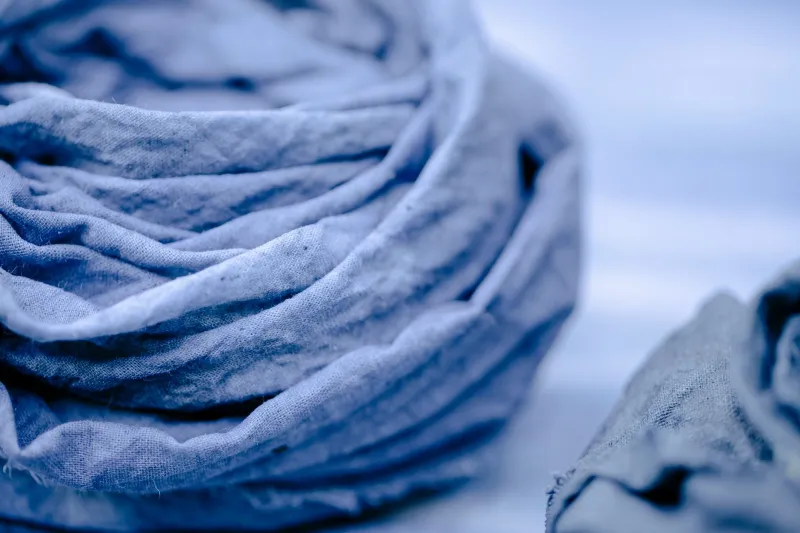
Egyptian textiles rarely command the attention given to gold masks or painted coffins. Yet within British collections they form one of the most revealing categories of ancient material. A fragment of coarse linen can preserve the trace of a farmer’s wardrobe; a length of fine cloth may point to temple production, funerary provision or long-distance exchange. In 2026, as museums reassess both their stores and their displays, these fragile objects raise pressing questions about labour, acquisition and the ethics of care.
The Evidence in the Fibre
Textiles are composite documents. Fibre analysis can distinguish flax from wool and help identify the preparation of raw material, while spinning and weave structures reveal technical choices that were often learned and repeated over generations. Dye chemistry offers another route into ancient decision-making: the presence of particular colourants may indicate access to specific markets, specialised knowledge or simply local availability. Radiocarbon dating, used judiciously and alongside other evidence, can help place undated fragments within broader chronological frameworks.
Such methods do not produce a simple story of progress. They show a working economy of flax cultivation, retting, spinning, weaving and finishing. They also show value. Linen could be ordinary, but it could also be carefully finished, patched, reused or reserved for ritual purposes. The wrappings of the dead belong to the same technical world as the garments of the living, even when their meanings differ sharply.
What British Collections Hold
Egyptian textiles reached the United Kingdom through excavation, division of finds, donation and purchase, especially during the nineteenth and early twentieth centuries. The result is a dispersed national collection. Major university and civic museums hold substantial groups, but smaller regional institutions also care for fragments that are less well known and sometimes less well documented. Provenance is uneven. Some pieces carry detailed excavation histories; others exist as isolated survivals with little more than an old label.
This unevenness matters. A textile without secure context can still be studied technically, but its interpretation becomes more cautious. Conservators and curators must resist the temptation to fill gaps with assumption. The object may be beautiful, but beauty is not the same as evidence.
Conservation in 2026
Textiles are among the most demanding museum objects. They respond to light, humidity, dust, pests and physical handling. Dyed fibres can fade; brittle linen can split; old repairs can fail. In Britain, where seasonal humidity shifts and energy costs continue to shape museum practice, the management of storage and display environments is a practical as well as an ethical matter. Climate control is not a neutral background service. It consumes resources and requires decisions about which objects justify which conditions.
In 2026, many institutions are balancing long-term preservation against public access. Rotation of light-sensitive material, custom mounts that reduce strain, careful documentation of past interventions and improved storage can all extend an object’s life. Digitisation offers a partial answer, but a high-resolution image is not a substitute for the material object. Conservation is not simply the prevention of change; it is the management of change with as much transparency as possible.
Display Without Curiosities
The interpretative challenge is considerable. Egyptian textiles can easily be presented as exotic fragments or as illustrations of funerary spectacle. A more responsible display asks what the object was made from, who may have made it, how it was used and how it came to be in Britain. Labels can acknowledge uncertainty. They can explain that a wrapping is not merely a covering but a ritual act, and that a worn garment is not a lesser object because it is ordinary.
There is also a question of voice. British collections are increasingly expected to explain acquisition histories and to work with Egyptian scholars and institutions. That does not require every fragment to carry a political essay, but it does require honesty about how national collections were formed. Textiles are particularly suited to this work because they resist monumental display. They demand close attention, and close attention is a good starting point for interpretation.
A Careful Future
The next phase of research is likely to be collaborative. Fibre and dye studies, improved imaging, comparative collection work and careful dating can all contribute, provided that they are integrated with archaeological and historical context. The greater risk is not that these objects will remain obscure, but that they will be made to serve a narrow visual appetite. Britain’s Egyptian textiles deserve better than that. They are evidence of skilled labour, complex belief and long-distance connection. In 2026, the task is to conserve them as such, and to display them without turning fragile lives back into curiosities.