After the Universal Museum: Britain's Egyptian Collections and the Return of Kemet
Photo: Sourabh.biswas003, CC BY-SA 4.0, via Wikimedia Commons
Repatriation is often discussed as a moral question. In 2026 it is also an institutional one. UK museums are being asked to explain not only how objects arrived, but why they should remain. Egyptian collections sit at the centre of that reckoning because they are large, popular and woven into the identity of museums from London to Liverpool, Oxford to Newcastle. The argument is no longer confined to campaign groups. It has entered the ordinary language of museum governance.
Three cases, not one
The Benin Bronzes are the clearest comparison. The 1897 punitive expedition gives a direct link between violence and acquisition, and UK institutions have already begun to negotiate returns. The Parthenon sculptures present a different case: a national icon removed by Lord Elgin between 1801 and 1805, with disputed permission and a long-standing Greek claim. Egyptian material is different again. Much of it entered British collections through excavation partage, diplomatic gifts, the antiquities trade and, in some cases, clear coercion. Egyptian law nationalised antiquities in 1983, so objects exported before then may have been legal under the rules of the time. A credible policy cannot treat every Egyptian object as loot, but neither can it hide behind legality when consent was colonial.
What Egypt is asking for
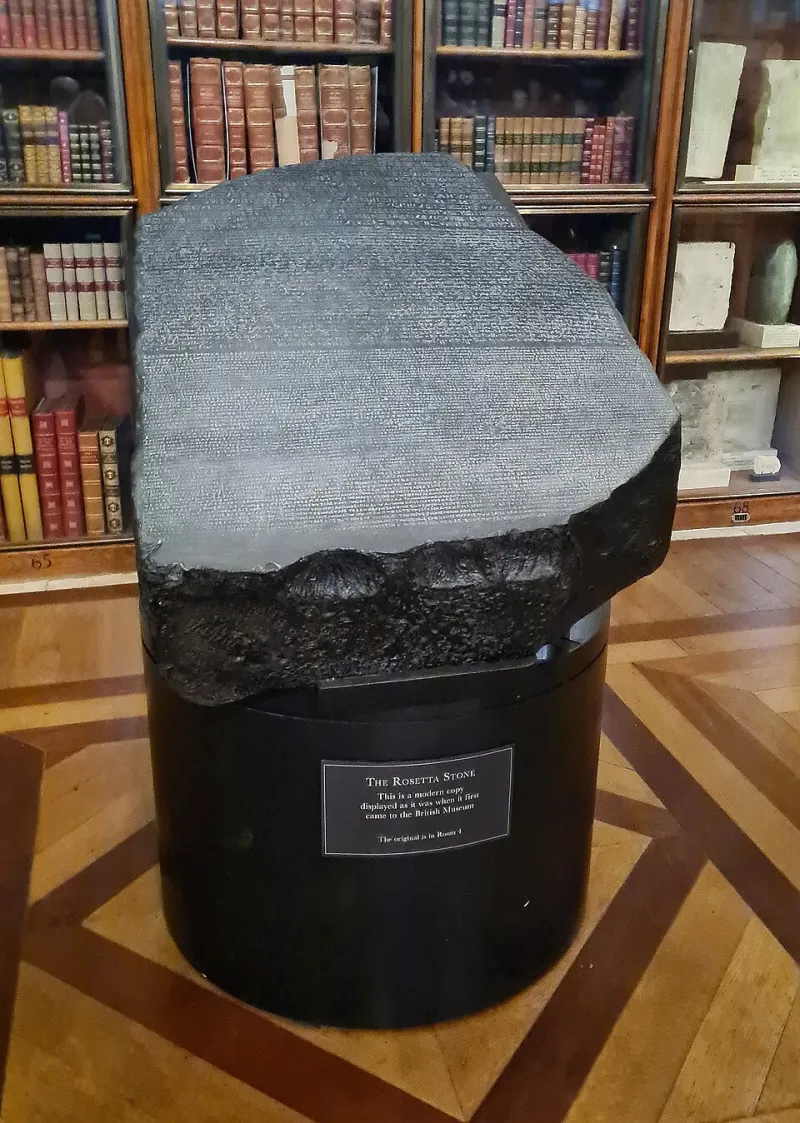
Egyptian claims are not a single demand. The Supreme Council of Antiquities has pursued iconic objects and broader restrictions on the antiquities trade, while Egyptian scholars and museums have argued for greater control over interpretation. The Rosetta Stone is the symbolic test case: found by French engineers in 1799, ceded to Britain in 1801 and shipped to the British Museum in 1802. Its return would not empty the museum, but it would acknowledge that the object is central to modern Egyptian identity as well as to global scholarship. Symbolism is not trivial in restitution debates; it is often the point.
The universal museum defence
Universal museums argue that encyclopaedic collections preserve objects, fund research and offer free access to a global public. There is real strength in that case. Conservation, cataloguing and comparative study matter, and many source countries face serious funding pressures. But the defence weakens when large parts of a collection are in storage, when Egyptian museums and laboratories have developed their own expertise, and when access in London is free while access elsewhere may not be. To a domestic UK audience, the universal museum argument can sound less like public service than a claim to permanent ownership dressed in curatorial language.
What a credible UK policy would look like
A serious restitution policy would begin with transparent provenance research, published object by object. It would establish a presumption of return where acquisition involved force, coercion or clear absence of consent, while recognising that legal partage and legitimate trade are part of the historical record. It would reform the legal framework that prevents some national museums from deaccessioning, rather than leaving trustees to hide behind statute. It would fund Egyptian partners and shared custody arrangements, not merely offer long-term loans as a way of postponing the ownership question. A loan is not a settlement if the dispute remains unresolved.
Such a policy would also need consistency. If the UK accepts return for Benin material because the acquisition was violent, it cannot dismiss Egyptian claims simply because the acquisitions were more varied. It should publish criteria, submit them to parliamentary scrutiny and accept that different objects will produce different answers. That is not weakness; it is the minimum condition of a defensible public policy.
The domestic argument
The universal museum case is not yet dead, but it is increasingly difficult to defend to a UK audience that has become familiar with restitution debates. Public opinion is not monolithic, and many visitors value the British Museum's Egyptian galleries precisely because they are free and central. Yet fairness is a powerful domestic language too. Museums that ask the public to trust their stewardship must explain why a particular object should stay, not merely why museums in general are good.
Kemet belongs to the world, but the world includes Egypt. A credible British settlement would not empty the galleries. It would replace a vague appeal to universality with a clear account of ownership, consent and shared responsibility. In 2026, that is the argument the sector still needs to make.