Biscuit-Tin Pharaohs: Kemet on the Postwar British High Street
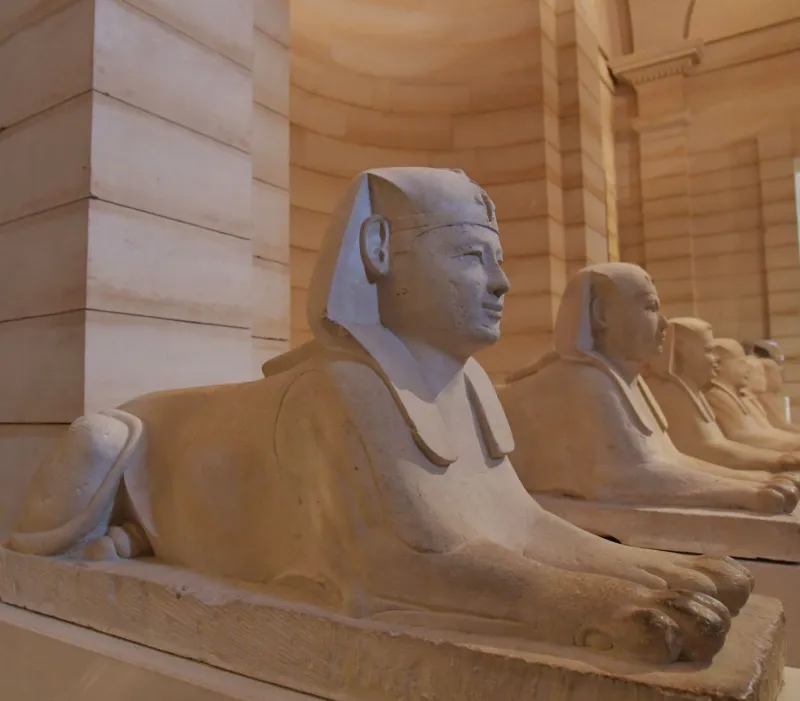
In the museum vitrine, ancient Egypt is made to look weighty. Gold, granite, papyrus, the solemn apparatus of chronology. Yet in post-war Britain, Kemet also travelled home in shopping baskets. It appeared on biscuit tins and tea packets, on cigarette cards and bleach bottles, on the cheap printed surfaces of the high street. These were not objects of scholarship. They were commercial ephemera, made to sell groceries and household goods. Precisely because they were disposable, they preserve a candid record of what ordinary shoppers were invited to think about ancient Egypt. In 2026, that record deserves more curatorial attention than it usually receives.
The high street as an Egyptian gallery
Egyptomania did not begin after 1945. The opening of Tutankhamun's tomb in 1922 had already sent scarabs, lotus capitals and mock hieroglyphs across European design. But the post-war period gave these motifs a new commercial life. In an age of rationing, reconstruction and expanding mass consumption, manufacturers needed packaging that could promise distinction without expense. Ancient Egypt supplied instant visual authority: a civilisation associated with durability, mystery, luxury and arcane knowledge, available as a printed pattern on a tin.
Biscuit tins were especially effective carriers. Reusable, decorative and often kept long after the contents were eaten, they turned kitchens into unofficial display cases. Tea cards and cigarette cards offered a more instructional version of the same impulse, combining collecting with abbreviated lessons in history, geography and archaeology. Household goods borrowed Egyptian names and silhouettes to lend glamour to the mundane. The result was a dispersed Egyptian gallery, installed not in Bloomsbury or South Kensington but on shelves, sideboards and shop counters across the United Kingdom.
The sphinx as salesman
The motifs were rarely archaeologically precise. A sphinx might be winged, crowned or given the face of a generically exotic queen. Hieroglyphs were often decorative rather than legible. Pyramids appeared in improbable combinations with palms, obelisks and lotus flowers. It is tempting to treat such objects as failures of accuracy. A more useful approach is to ask what work the inaccuracy performed. The sphinx sold mystery and endurance. The pyramid sold stability. The lotus sold purity and freshness. The hieroglyph sold the pleasure of a code, even if the code was never meant to be read.
This was Egypt as a brand language: flexible, repeatable and cheap to print. It could advertise tea, biscuits, cigarettes or bleach without requiring the consumer to know anything about Egyptian history. The ancient world became a visual shorthand for quality, exoticism and escape from post-war drabness. That shorthand was not politically innocent. It took a living country and its antiquities and converted them into a decorative resource for British commerce. The packaging is therefore evidence not only of taste but of power.
What ephemera collections can tell us
Museum collections of packaging and advertising are well placed to recover this history. The Museum of Brands in London, the Victoria and Albert Museum's design collections, local history archives and trade catalogues all hold material that seldom appears in Egyptology galleries. Yet ephemera is fragile and often catalogued under design, commerce or social history rather than ancient Egypt. Cross-collection work is essential. A biscuit tin in a design store and a scarab in an Egyptology department may belong to the same story of reception, but institutional boundaries keep them apart.
There is also a question of value. Ephemera was made to be thrown away. Surviving examples are often the ones that were kept for sentimental or practical reasons, which means the archive is skewed towards attractive reusable containers rather than the full range of printed material. Curators should read that bias carefully. The tin on the shelf is not a transparent window onto popular belief. It is a surviving fragment of a much larger commercial conversation.
A case for curatorial attention in 2026
In 2026, as UK museums continue to reconsider how Egyptian material is displayed and interpreted, domestic ephemera offers a low-cost, high-relevance route into public history. It can show how ancient Egypt entered everyday life beyond the lecture theatre and the guided tour. It can also complicate the story of British Egyptomania by placing it alongside questions of empire, trade and national self-image. The Suez crisis of 1956, for example, remains a sharp reminder that British enthusiasm for Egyptian motifs did not imply respect for Egyptian sovereignty.
None of this requires museums to treat biscuit tins as equal to papyri. It requires them to treat packaging as a primary source for the afterlife of Kemet in modern Britain. Small displays, digitisation projects and collaborations between Egyptology and design collections would be enough to begin. The sphinx on the shelf is not merely a piece of cheerful bad taste. It is a document of how ancient Egypt was packaged, sold and imagined. For a site devoted to Kemet unearthed for modern minds, that is a subject worth taking seriously.