The Case for Saying 'Probably': How Dating Evidence and Museum Labels Drift Apart
Photo: RaffiKojian, CC BY 4.0, via Wikimedia Commons
A museum label is a small literary form with an unusually heavy burden. In three or four lines it must name an object, place it, date it and justify its presence. The first two are usually manageable. It is the third — the date — that causes the most trouble, because the date on the case is frequently a summary of a scientific result that nobody has explained to the visitor, and often a summary that flattens the result into something considerably more confident than the evidence allows.
Three clocks, none of them a metronome
Egyptian objects can be dated by at least three independent means, and each carries its own species of error.
The first is historical: king lists, regnal years, synchronisms with neighbouring cultures, and a small number of astronomical anchors. This is a magnificent intellectual achievement and it is not a clock. It is a framework of relative positions, pinned at intervals to observations of the sky whose interpretation is still argued over.
The second is radiocarbon. Accelerator mass spectrometry can measure the residual carbon-14 in a lock of linen, a wooden coffin board, a resinous lump, a basket, a papyrus. The measurement then has to be calibrated against a curve derived from tree rings and other archives — currently IntCal20 — which converts a laboratory figure into a calendar probability distribution. That distribution is frequently not a neat range but a series of humps, because the calibration curve itself wobbles. A sample may yield a 95% interval spanning two centuries, with a gap in the middle where the object is unlikely to belong.
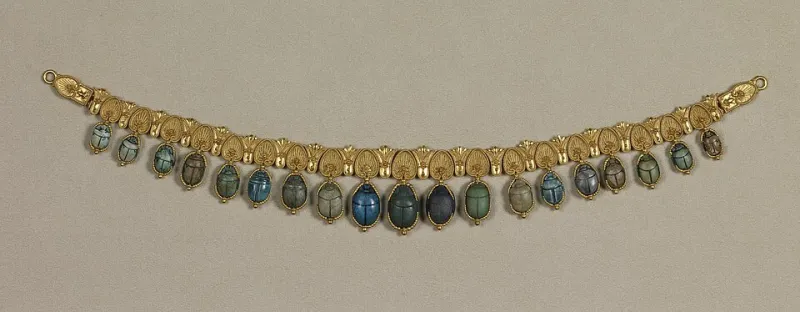
The third is luminescence: thermoluminescence for ceramics and faience, optically stimulated luminescence for sediments and, in favourable circumstances, for surfaces. These methods date the last time a material was heated or exposed to light, which makes them valuable for testing whether a faience amulet is ancient or a nineteenth-century confection, and awkward for objects that have been displayed, handled or stored under uncertain conditions.
Around all three sits materials analysis — X-ray fluorescence, scanning electron microscopy, petrography, lead isotope work, pigment identification. These do not date an object directly. They establish whether its clay, stone, metal or glaze is consistent with an alleged origin, and they are the quiet workhorses of every attribution dispute in the field.
Why the caveats vanish
Given all that, the label reading "c. 1350 BC" is not a lie. It is a compression. But compression has costs, and the costs fall on the visitor, who is given no way of knowing whether the figure rests on a cartouche, a carbon sample, a stylistic parallel, or the recollection of a dealer.
The pressures that produce this are institutional rather than conspiratorial. Labels are written by curators with too little time and reviewed by committees with too many concerns. Gallery text is constrained by word counts, font sizes and the demands of an audio guide that must say one thing rather than five. Fundraising and press offices prefer a date to a distribution; "New Kingdom, about 1400 BC" makes a better photograph caption than "calibrated radiocarbon, 68% probability within a 240-year window". And there is a legitimate fear that foregrounding doubt will read to some visitors as institutional weakness, as though the museum were admitting it did not know what it had.
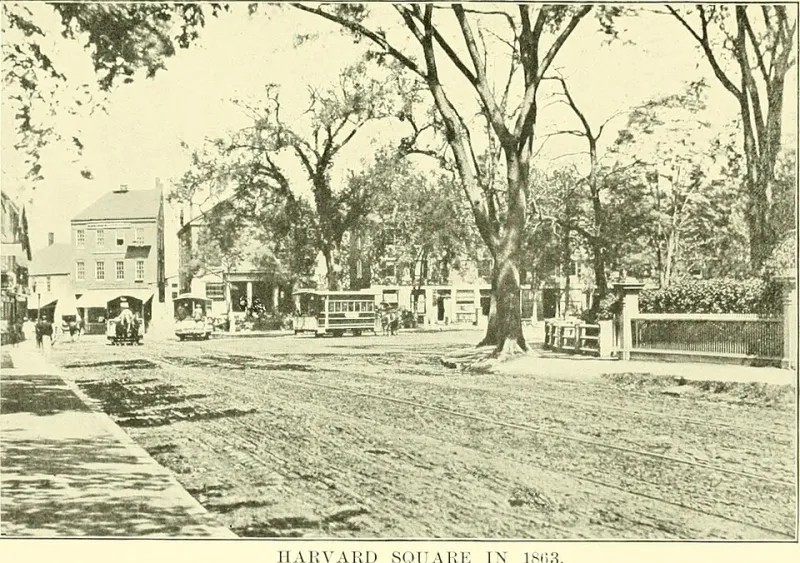
There is also the inheritance problem. Many Egyptian objects in Britain entered collections in the late nineteenth and early twentieth centuries, with dates assigned by connoisseurship alone. Those dates hardened into catalogue entries, the catalogue entries were copied into registers, and the registers were copied onto labels. A scientific result obtained in 2019 may sit in a conservation file while the gallery continues to display a number arrived at in 1908. The two are rarely reconciled, because reconciling them requires somebody to be given the time.
What an honest label looks like
It is not, in practice, very difficult. A defensible label separates the three things that are currently mashed together: what the object is, how it is dated, and how it reached Britain.
Something like this would be a start: "Jar, fired clay. Said to be from Thebes. Thermoluminescence date 1450–1250 BC (95% probability). Acquired 1898; no excavation record." It is twelve words longer than the present text and it tells the reader more than any amount of stylistic description.
Three principles follow. First, name the method. A visitor who is told that a date comes from radiocarbon knows immediately why the range is wide, and learns something real about how archaeology works. Second, show the range rather than a point. Calibrated radiocarbon results are ranges; presenting them as a midpoint is a choice, not a necessity. Third, distinguish dating from provenance. "Said to be from" is one of the most honest phrases in museum English and deserves to be used far more often than it is.
Digital labels make this easier than it has ever been. A short printed caption can carry a QR route to a page showing the full measurement, the laboratory code, the calibration curve and the acquisition history. Several British institutions have already experimented with layered interpretation of this kind for repatriation and collecting-history trails; the same architecture suits dating far better than a static card.
The risk of over-claiming
The argument for precision is not merely academic. Over-confident dates have real consequences: they distort comparative studies that aggregate museum catalogues, they inflate insurance valuations, and they make disputes about restitution harder, because an object with a firm date and a firm findspot sounds more legitimate than one that has neither.
None of this requires museums to abandon the word "probably". It requires them to trust visitors with it. The public that queues for a blockbuster exhibition is perfectly capable of understanding a probability distribution when it is put plainly, and considerably more capable than an institutional habit of certainty assumes. In 2026, with the analytical results already sitting in the files, the gap between what we know and what we say is a matter of editorial will.