The Apothecary’s Uncertain Powder: Britain’s Mumia Trade and the Evidence We Still Hold
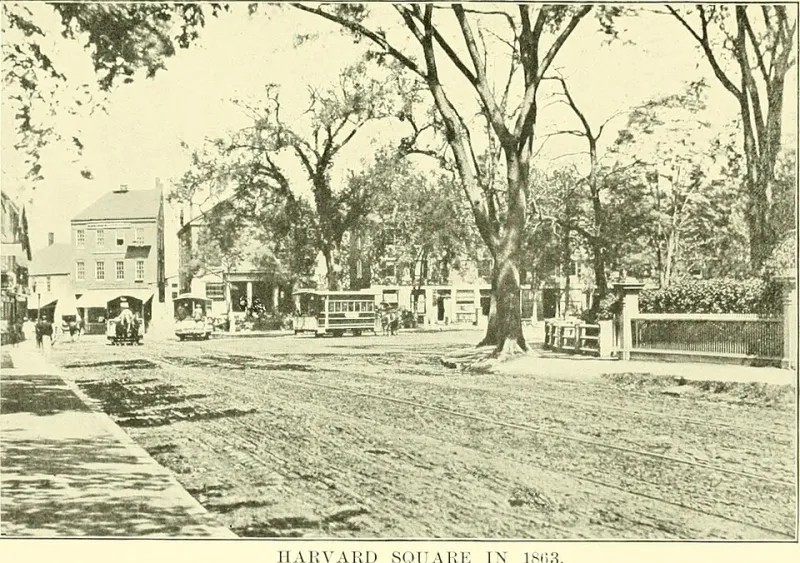
Photo: Internet Archive Book Images, No restrictions, via Wikimedia Commons
For a modern visitor, the phrase “powdered mummy” has the ring of gothic exaggeration. Yet in early modern Britain it was a commercial and medical category. Apothecaries stocked a substance called mumia, physicians included it in materia medica, and customers bought it in the hope of cure. The story is often told as a macabre curiosity: Britain grinding up the Egyptian dead for medicine. The evidence is more fragmented, and more revealing, than that.
A Word with Two Bodies
Mumia derives from the Arabic mūmiyā, a term associated with bitumen and embalming substances. In European hands the word drifted. It could refer to embalmed human remains, to mineral pitch, or to a compound sold under a familiar name. This ambiguity is not pedantic. It determines what was actually in the drawer.
A label reading mumia is evidence of a transaction, not a species. It may have marked Egyptian human tissue. It may have marked bitumen from the Dead Sea or a European substitute. It may have marked a mixture whose contents were never stable. Early modern pharmacy was not a world of precise chemical assertion. Names carried authority, habit and commercial value. Mumia was a word that could hold a body, a mineral and a market at once.
That double life matters for Kemet. The trade in mumia entangled Egyptian funerary practice with British medicine, but it did so through an object whose identity was often uncertain. The history is not simply one of British consumption of Egyptian dead. It is also a history of how words, labels and expectations shaped what people thought they were buying.
The Trade and Its Paper Trail
Britain did not invent the mumia trade. It joined a Mediterranean and European market in which Egyptian mummies, bitumen and related substances moved through merchants, apothecaries and physicians. The demand was real, but its scale is difficult to measure. Popular accounts sometimes imply an industrial traffic in human remains. The documentary record does not support confident claims of that kind.
What survives is uneven. Pharmacopoeias list mumia, showing that it was recognised by medical authorities. The London Pharmacopoeia included it in the seventeenth century, and the substance lingered in European materia medica into the eighteenth. Apothecary inventories, advertisements, recipe books and bills of sale add further traces. These sources show that mumia was stocked, prescribed and discussed. They rarely show how much Egyptian human material was involved, or where every consignment came from.
Inclusion in a pharmacopoeia is evidence of recognition, not of volume. A labelled drawer in a pharmacy collection is evidence of supply, not of origin. The archive records demand and nomenclature more clearly than it records quantity. That distinction should temper any account that turns a medical habit into a wholesale plunder narrative.
Recipes, Labels and the Limits of the Archive
British recipe books and medical guides used mumia for a range of complaints, often in compounds with other ingredients. It was the kind of substance that sat within a wider economy of remedies: resins, minerals, animal products and imported exotica. Its appeal lay partly in distance and antiquity. A medicine from Egypt carried associations of age, authority and rarity that a local ingredient could not match.
Surviving specimens in UK collections are often small, labelled and ambiguous. The Wellcome Collection, the Royal Pharmaceutical Society Museum and regional medical collections hold material that speaks to the history of pharmacy rather than to a single dramatic trade. Some labels distinguish mumia vera from mumia mineralis, a distinction that acknowledges the difference between human remains and bitumen. Others do not. Analysis could clarify individual samples, but sampling human remains raises ethical questions of its own. The evidence is frequently a label, a drawer or a recipe, not a body.
This is where the mumia story becomes useful for museums. The object is not only a remnant of Kemet. It is a document of British medical culture, of commercial naming, and of the way collections acquire things whose identities are uncertain. To interpret it well, museums must resist both sensationalism and euphemism.
What Museums Owe the Label
Human remains in UK collections are governed by ethical and legal frameworks, including the Human Tissue Act 2004 and sector guidance on care and display. Mumia complicates those frameworks because the object may not be human remains at all. It may be mineral, or a mixture, or a substance whose provenance was never recorded. Cataloguing should say so plainly.
An interpretive label should explain that mumia was a medical commodity and that demand for it contributed to the commodification of the dead. It should also explain that the word was unstable. A display that merely repeats the phrase “powdered mummy” without context turns a complex history into a shock. A display that omits the human dimension altogether turns it into a harmless curiosity.
The neutral path is documentation. Museums should record what is known, what is suspected and what cannot be established. They should distinguish between Egyptian human material, bitumen and later substitutes. They should acknowledge the trade without inventing figures. And they should ask whether display is necessary, or whether a labelled absence would serve better.
A History Worth Keeping Visible
The mumia trade is not a minor curiosity in the history of Kemet in Britain. It connects Egyptian funerary practice to British pharmacy, to the consulting room and to the museum store. It shows how medical demand shaped collections, and how a word can carry a body, a mineral and a market at once.
For UK audiences, the lesson is not that Britons consumed mummies by the ton. It is that the evidence of such trades is often quiet, partial and labelled. The apothecary’s drawer is a document. It deserves the same care as any inscription, and the same honesty about what it can and cannot tell us.