The Glasshouse Nile: Reconstructing Kemet’s Flora in Britain
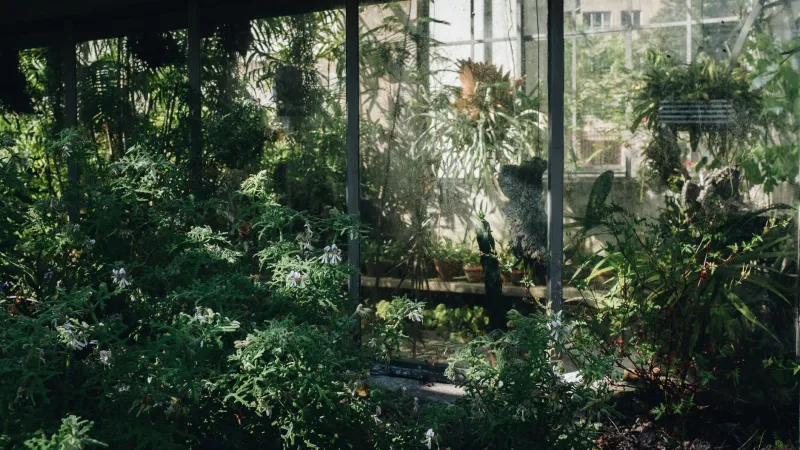
At Kew, Cambridge, Oxford and Edinburgh, visitors can encounter fragments of ancient Egypt without entering a museum. Papyrus stands in shallow water; emmer wheat appears in heritage plots; blue water lilies open beneath glass. These are not relics but living interpretations, cultivated in British conditions from archaeobotanical evidence and historical research. In 2026, as botanic gardens expand their ancient-world programming, the question is no longer whether Kemet’s flora can be grown in Britain. It is what such cultivation means when the Nile is absent and the glasshouse is doing much of the work.
Evidence Before Spectacle
The starting point is not a picture of a pharaoh’s garden but the seed bank, the desiccated offering and the rubbish deposit. Archaeobotanists identify ancient plant remains from tombs, settlement sites and food residues, while documentary and artistic sources supply context. Emmer wheat, barley and flax are well attested; sycamore fig, papyrus and persea are harder to reconstruct as living displays because their cultivation requirements and ancient varieties do not map neatly onto modern garden stock.
That distinction matters. A plant labelled as ancient may be a modern cultivar of a species known in Kemet, not a genetic survivor of pharaonic agriculture. A papyrus in a British conservatory is a living relative, not a direct relic. The most responsible displays say so plainly. They treat the glasshouse as an interpretative space rather than a resurrection chamber, and they allow uncertainty to remain visible beside the foliage.
The Glasshouse as Archive and Stage
Several UK gardens have found practical ways into this material. Papyrus is comparatively straightforward in a heated water tank, though it demands space and consistent humidity. Emmer wheat can be grown outdoors in Britain and used to discuss ancient grain economies, baking and crop diversity. Sycamore fig needs warmth and careful pruning; persea is rarer and less familiar to visitors. The blue water lily, often confused in popular writing with the sacred lotus, requires a tropical or warm-temperate house and precise labelling if the distinction is to survive public interpretation.
This is where British botanic gardens excel and where they risk overreach. A well-curated display can connect a plant to its ancient uses, from papyrus manufacture to funerary offerings, without pretending that a Cornish or London glasshouse reproduces Egyptian ecology. The better examples combine living plants with herbarium specimens, archaeological evidence and clear text. The weaker ones lean on theatrical props and leave visitors with a vague sense of Egypt as a decorative backdrop.
Climate, Cost and Biosecurity
Every reconstructed Nile in Britain carries an environmental bill. Tropical and subtropical houses require heat, humidity and water, and their energy use sits awkwardly beside commitments to sustainability. Gardens can justify such displays as conservation and education, but the justification needs to be explicit. A papyrus tank is not only an aesthetic choice; it is a claim on resources that could support other collections.
Biosecurity is equally serious. Papyrus can behave invasively in frost-free wetlands, and British gardens must avoid importing wild seed or allowing garden waste to escape into surrounding habitats. UK plant health rules and invasive non-native species guidance apply to botanic collections as much as to commercial nurseries. The safest route is cultivated stock with documented provenance, strict containment and honest labelling. Ancient landscapes should not become a route for modern ecological harm.
The Ethics of Distant Landscapes
There is also a question of voice. A British glasshouse can display Kemet’s plants while saying little about the Egyptian farmers, craftspeople and botanists who know the Nile’s ecology today. Reconstruction becomes more credible when gardens work with Egyptian institutions, cite Egyptian research and avoid treating the ancient past as a lost world that only European science can recover. Living heritage is not a costume for the visitor economy.
That does not mean British gardens should abandon the subject. It means they should present it as interpretation, not ownership. Labels can explain why a species is grown, where the evidence comes from and which questions remain open. Public programmes can invite visitors to compare ancient crop diversity with modern food systems, or to examine how conservation glasshouses themselves shape what survives.
What the Visitor Should Ask
In 2026, a visitor to a Kemet-inspired plant display should be able to ask three questions. Is this plant ancient, or a modern relative? What evidence supports its presence here? And what does this display cost, ecologically and intellectually? Gardens that welcome those questions will produce richer exhibitions than those that simply promise a pharaoh’s garden in Britain.
The glasshouse Nile is not a failure because it is not the Nile. It is valuable when it is honest about distance. Kemet’s flora can be cultivated in Britain as a form of public conservation and historical interpretation, but only if the plants are allowed to be plants rather than symbols, and only if the garden admits what glass, heat and careful labelling cannot restore.