Piccadilly’s Pharaoh: The Egyptian Hall and the Commerce of Wonder
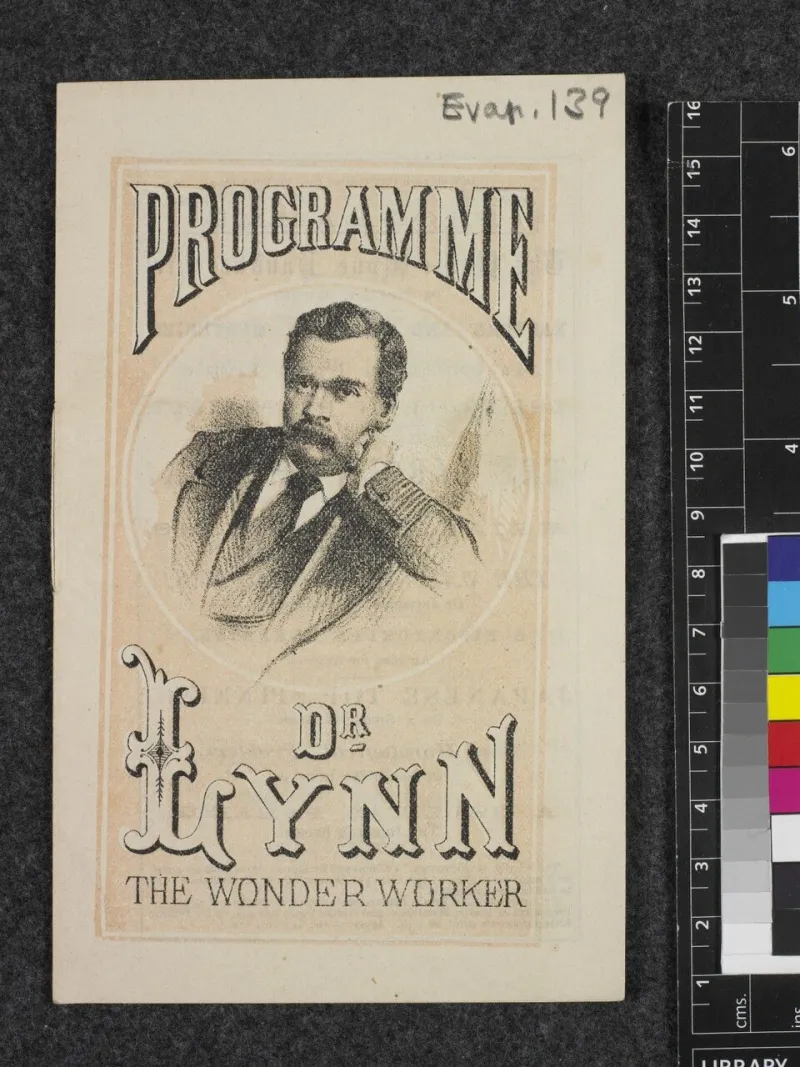
Photo: Southwold1966, CC0, via Wikimedia Commons
For a visitor walking west along Piccadilly in the early nineteenth century, the Egyptian Hall was impossible to miss. Its façade announced another country before anyone had bought a ticket. Columns, hieroglyphic ornament and a heavy, theatrical silhouette turned a London exhibition building into a piece of Egyptian scenery. Inside, the promise was equally direct: here was the ancient world, available for inspection, for a fee.
The Egyptian Hall opened in 1812, designed by Peter Frederick Robinson for the collector and showman William Bullock. It was not a national museum. It was a commercial enterprise, and that is precisely what makes it interesting. The hall helped to establish ancient Egypt as a London entertainment, and in doing so it shaped public expectations of what an Egyptian display should look and feel like.
A Façade That Promised Elsewhere
The architecture did much of the work. The Egyptian Hall did not simply house objects; it advertised an experience. Its exterior borrowed the visual language of temples and tombs, translating them into a respectable London streetscape. Visitors were invited to step out of Piccadilly and into a version of Egypt that was dramatic, legible and slightly overwhelming.
That approach was commercial, but it was not frivolous. The hall attracted serious collectors, artists and scholars as well as curious crowds. It helped to normalise the idea that ancient Egypt could be displayed in Britain, and it demonstrated that the public would pay to see it. The fashion for Egyptian design in architecture, furniture and jewellery in the nineteenth century owed something to spaces like this.
Belzoni and the Theatre of Discovery
One of the hall’s most famous associations was with Giovanni Belzoni, the engineer-turned-excavator whose work in Egypt made him a celebrity. In 1821, Belzoni exhibited a reconstruction of the tomb of Seti I at the Egyptian Hall. The display was part antiquarian record, part theatrical installation. It offered visitors a sense of entering a tomb without leaving London.
Belzoni’s career illustrates the period’s tangled relationship between discovery and spectacle. He was an extraordinary showman, but he was also a serious recorder of monuments. His exhibitions brought Egyptian material into public view at a time when few Britons could travel to Egypt. They also reinforced the idea that ancient Egypt was a resource for European display, a place whose wonders could be transported, reconstructed and sold.
From Antiquities to Variety
The Egyptian Hall did not remain a single-purpose Egyptian museum. Over the decades it hosted a shifting programme of exhibitions, lectures and entertainments. It became associated with magic shows, panoramas and popular spectacle as much as with antiquities. That versatility was part of its commercial logic. The hall was a venue, and Egypt was one of its most successful themes.
This is where the distinction between spectacle and scholarship becomes useful. The hall did not invent the idea that Egypt could be popular, but it made popularity central. Some of its displays were carefully researched; others were designed primarily to astonish. The two impulses were not always separated. A reconstruction could be both an educational aid and a box-office attraction.
What Today’s Displays Inherit
Modern museums are rightly wary of the Egyptian Hall’s showmanly tone. They do not usually promise a trip to ancient Egypt or invite visitors to gawp at reconstructed tombs. But they have inherited some of its habits. Immersive layouts, dramatic lighting, carefully staged entrances and blockbuster exhibitions all owe something to the Victorian belief that ancient Egypt should be felt as well as understood.
The difference is that contemporary museums are expected to explain their choices. A display can be atmospheric, but it should also be honest about what is real, what is reconstructed and what is uncertain. The Egyptian Hall rarely had to justify itself in those terms. It could rely on novelty, and on the sheer force of the ancient world as a commercial proposition.
A Walk Through the Afterlife of a Fashion
The Egyptian Hall was demolished in 1905, and its site is now part of the ordinary fabric of Piccadilly. There is no grand monument to it, which is fitting for a building that was always more about the event than the architecture. But its influence is not hard to find. Every time a museum uses Egyptian design to draw a crowd, or a visitor expects an ancient-world exhibition to be immersive, something of the hall’s commercial instinct survives.
For the heritage traveller, the lesson is to look beyond the objects. The Egyptian Hall was a place where scholarship, entertainment and commerce met, and where British enthusiasm for Kemet was shaped by the price of a ticket. That history should not be dismissed as mere showmanship. It is part of the reason Egypt remains so visible in British cultural life, and part of the reason museums today must work harder to distinguish wonder from understanding.